
Every time I watch a fashion show, I always think about the question: how are those clothes that are too weird to be weirdly designed? Are these clothes intended to be worn by people? There’s a reason.
Whenever we see models walking down the catwalk in strange designer clothes, it’s hard not to wonder what such impractical garments are designed for. Do you want someone to wear it or not? How did the fashion show style evolve into a messy state that we are increasingly unable to understand, and what is the existence of these bizarre clothes?
The “unexpected” clothing designs you see so often these days are not new. Creative thinking and artistic design styles have been around since the 1930s. For example, surrealist clothing design that breaks the barrier between art and fashion. Surrealism, at its core, is divorced from reality, emphasizing people’s subconscious or unconscious activities——to be emotional, not rational. This new trend of unbridled imagination and irregularity soon affected the fashion industry
In recent years, fashion shows have become more diversified, with more and more unpredictable artistic designs appearing on the catwalk.

And some designers, like Comme Des Garcons. For her, clothing is just a carrier, and what she wants to express is essential.
Fashion shows are no longer just marketing the clothes to be sold, as they were in the beginning. They are more about aesthetic and creative art, rather than practical functions.
The collections on display each season have a specific theme, and when the show is over, the items are converted by the fashion industry into wearable pieces for sale in a clothing store or mall. The colors, fabrics, and general aesthetics of the clothes on the runway will remain, but the weird features will be cut.
Of course, these impractical costumes will still wait for the first adopter, which is a celebrity or a super-rich person who will occasionally appear in public wearing an exaggerated design.
For those who watch countless shows every day, these outrageous and bizarre designs are attractive.
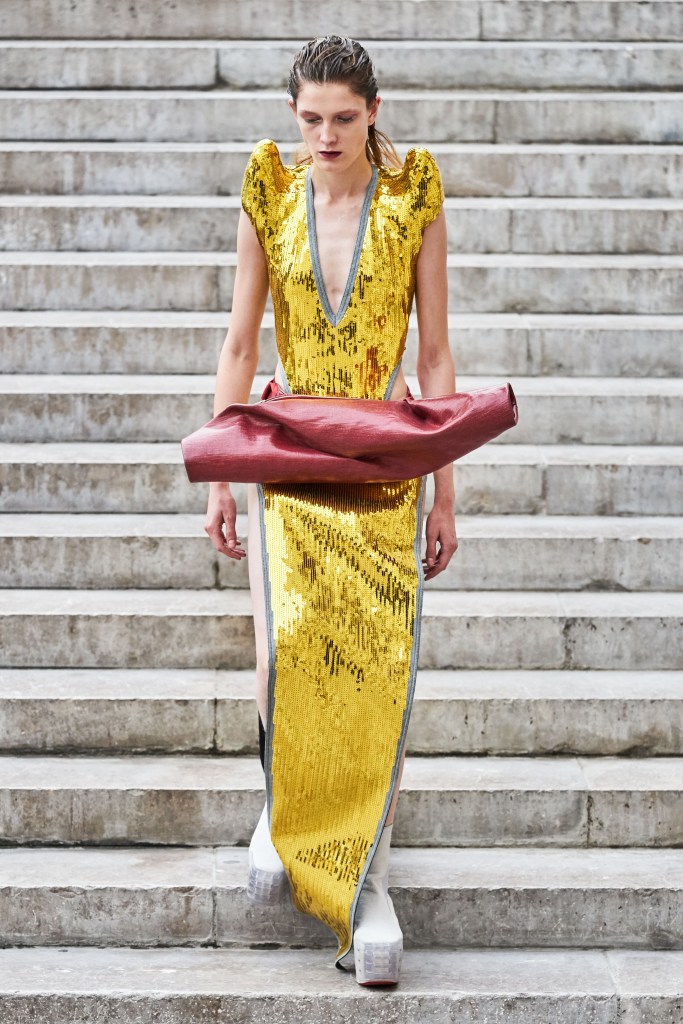
https://www.vogue.com/fashion-shows/spring-2020-ready-to-wear/rick-owens#collection 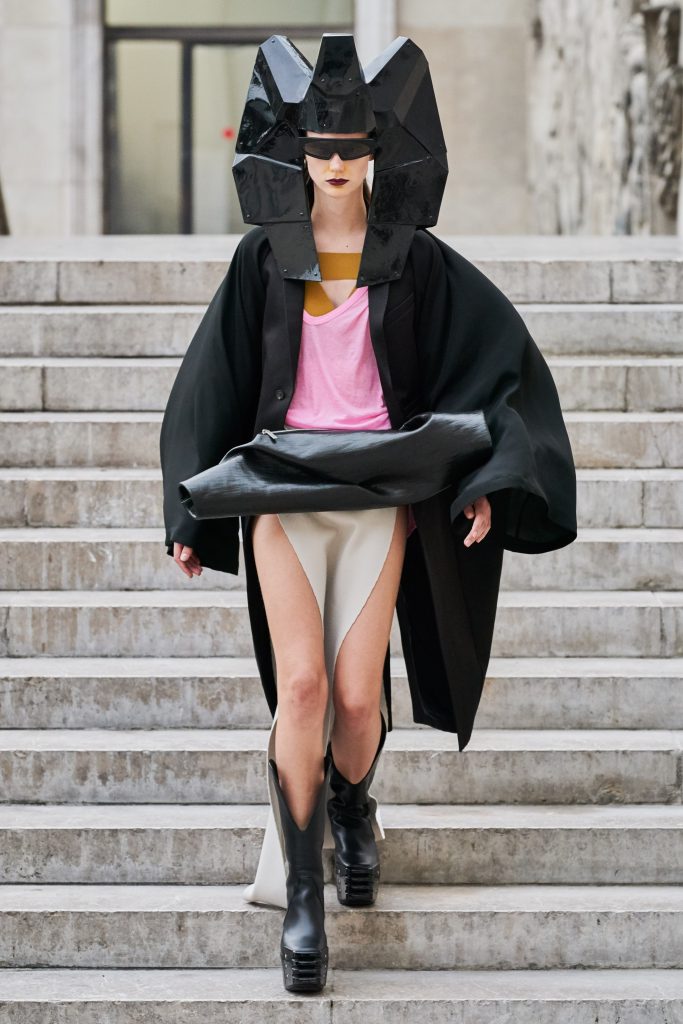
https://www.vogue.com/fashion-shows/spring-2020-ready-to-wear/rick-owens#collection
While the designers don’t expect anyone to pay for their creations, it costs a lot of money to show them — an average show costs about $40,000. The role of these shows is to promote their brand and let others know the designer’s style or even the collision of artistic sparks or more design inspiration.
When the show is over, these items are converted into wearable styles by the fashion industry and sold in clothing stores or malls. The colors, fabrics, and general aesthetics of the clothes on the runway will remain.
 OUT OF THE WAY